Graphite
A crystalline carbon allotrope used in refractories, batteries, and lubricants.
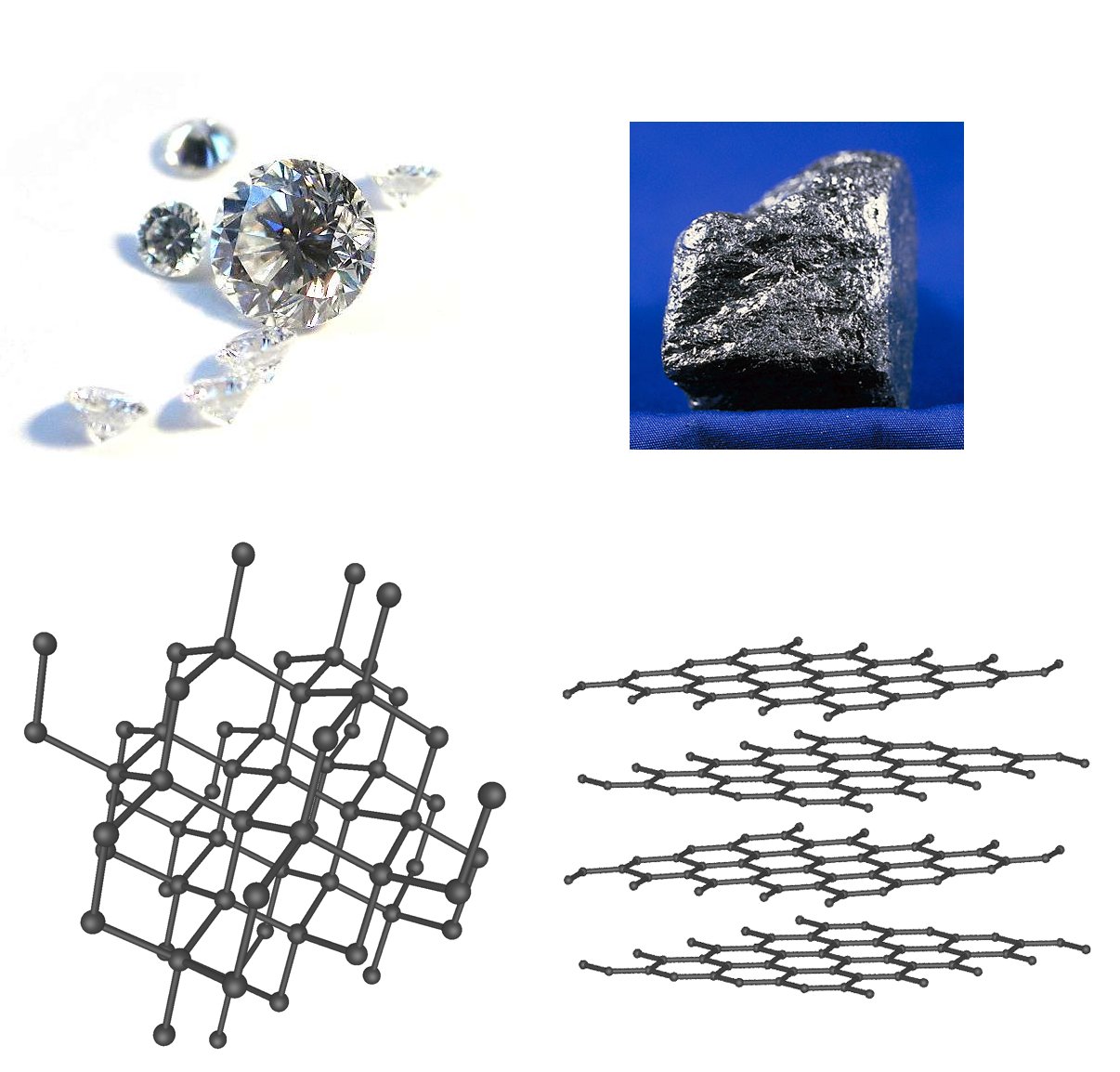
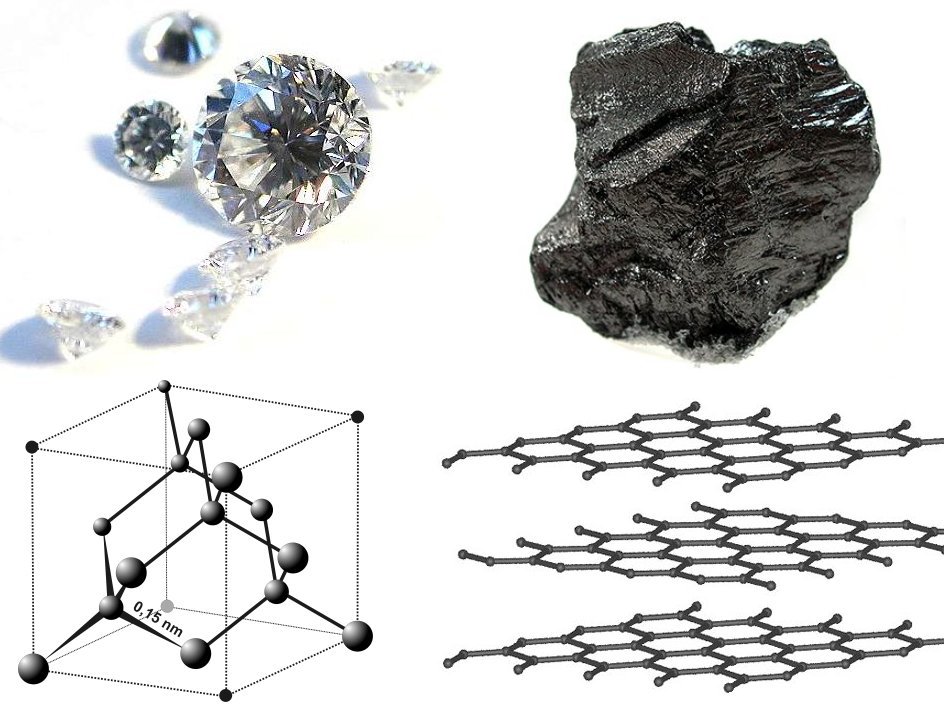
Graphite is a crystalline allotrope of the element carbon, composed of numerous stacked layers of graphene, typically hundreds of layers thick. It is the most thermodynamically stable form of carbon under standard conditions and occurs naturally in metamorphic rocks, where it forms from the reduction of sedimentary carbon compounds during metamorphism. It is also found in igneous rocks and meteorites. Natural graphite deposits are classified by ore morphology into amorphous (microcrystalline), crystalline flake, or lump/chip types, each arising from different geologic settings such as thermally metamorphosed coal or carbonaceous metamorphic rocks. Mining these deposits carries serious negative environmental impacts. Synthetic graphite, with purity exceeding 99.9% carbon, is produced industrially by heating hydrocarbon materials above 2,100 °C for weeks, most commonly via the Acheson process, which also vaporizes impurities like hydrogen, nitrogen, and metals. Synthetic graphite typically has lower density and conductivity but higher porosity than natural graphite, though it can be formed into large, high-purity flakes. Other production methods include chemical vapor deposition from hydrocarbons, decomposition of thermally unstable carbides, or crystallization from metal melts supersaturated with carbon. Graphite’s structure consists of sheets of trigonal planar carbon with sp² bonding, forming a honeycomb lattice; the weak van der Waals bonds between layers allow them to slide past each other, giving graphite its lubricating properties. Electrical conductivity perpendicular to the layers is about 1000 times lower than within them. Two stacking arrangements exist: alpha (hexagonal, ABA stacking) and beta (rhombohedral, ABC stacking), with natural graphite containing 5–15% beta form, which can convert to alpha upon heating to 1300 °C. Graphite converts to diamond under extremely high pressure and temperature. Its low cost, thermal and chemical inertness, and conductivity make it essential for refractories, lithium-ion batteries, foundries, and lubricants, with global consumption reaching 1.3 million metric tons in 2022. Research continues into new production methods, including biographite from forestry waste and photocatalytic graphitization from various carbon sources.
- field
- Materials science, carbon allotropes
- known_for
- Most stable form of carbon under standard conditions; key material in refractories, lithium-ion batteries, foundries, and lubricants
- natural_sources
- China, Mexico, Canada, Brazil, Madagascar
- crystal_structure
- Hexagonal (alpha) and rhombohedral (beta) stacking of graphene layers
Lore & Background
Graphite occurs naturally in metamorphic rocks from the reduction of sedimentary carbon compounds, and also in igneous rocks and meteorites. Natural graphite deposits are classified as amorphous (microcrystalline) or crystalline (flake or lump/chip), depending on ore morphology and geologic setting. Coal thermally metamorphosed yields amorphous graphite, while crystalline flake graphite comes from carbonaceous metamorphic rocks, and lump graphite from veins in high-grade metamorphic regions. Synthetic graphite, with high purity exceeding 99.9% carbon, is produced via thermal graphitization of hydrocarbons above 2,100 °C, often through the Acheson process, or by chemical vapor deposition, decomposition of carbides, or crystallization from metal melts.
Reader's Guide
Graphite's significance lies in its combination of low cost, thermal and chemical inertness, and conductivity of heat and electricity, making it indispensable in high-energy and high-temperature processes. Its major uses include refractories (50% of consumption), lithium-ion batteries (18%), foundries (10%), and lubricants (5%). The material's layered structure, with weak van der Waals bonds between graphene sheets, allows easy sliding and self-lubricating properties, though it can promote galvanic corrosion in metals like aluminum. Research continues into new production methods, including biographite from forestry waste and photocatalytic graphitization. Graphite also converts to diamond under extreme pressure and temperature, and its presence in meteorites includes grains with isotopic compositions predating the Solar System, making it one of the oldest known minerals in the universe.
Did You Know?
- Some microscopic graphite grains in meteorites have isotopic compositions indicating they formed before the Solar System.
Structural Identity & Purity
HOPG stands as one of the most structurally refined forms of synthetic carbon available to modern science. Unlike common graphite, where crystallites point in random directions, HOPG features an extraordinary degree of alignment among its individual graphite crystallites. This alignment is quantified through what is known as the mosaic spread angle—a measure of how much the crystallites deviate from perfect parallel orientation. In the finest HOPG specimens, this spread falls below one degree, making the material nearly a single crystal in practical terms. The individual crystallites themselves are relatively small, with diameters typically ranging between one and ten micrometers. Despite their modest size, their collective alignment gives HOPG a purity and order that distinguishes it sharply from ordinary pyrolytic graphite. The interplanar spacing within HOPG closely mirrors that found in naturally occurring graphite, suggesting the synthetic process successfully reproduces nature's atomic architecture at the lattice level.
Synthesis & Discovery
The production of HOPG builds directly upon the established pyrolytic graphite manufacturing process, but introduces a critical modification: the application of additional tensile stress along the basal-plane direction during growth. This mechanical constraint forces the growing crystallites into a more uniform orientation, dramatically reducing the mosaic spread and yielding the exceptional alignment that defines the material. The underlying principle—using applied stress to drive recrystallization of graphite—was first articulated by L. C. F. Blackman and Alfred Ubbelohde in 1962, marking a pivotal moment in synthetic carbon science. Their insight that mechanical tension could guide crystallographic order rather than merely produce bulk material opened the door to a new class of engineered carbon structures. The result of this stress-assisted growth is not only superior crystallite alignment but also an interplanar spacing that closely approximates the values observed in pristine natural graphite, bridging the gap between laboratory synthesis and geological formation.
Scientific Applications
HOPG's exceptional structural order makes it indispensable in two major areas of experimental physics. In x-ray optics, the material serves as a monochromator—selecting a narrow band of wavelengths from a broader x-ray beam to produce the clean, single-energy radiation that high-resolution diffraction and spectroscopy experiments demand. The low mosaic spread and well-aligned crystallites are precisely what enable HOPG to diffract x-rays with the sharpness and predictability required for such applications. In the realm of scanning probe microscopy, HOPG fulfills a dual role: it acts as a substrate on which nanoscale structures can be grown or deposited, and it provides a known, well-characterized lattice spacing that researchers use to calibrate the magnification of their instruments. Because the interplanar spacing in HOPG closely matches that of natural graphite, it offers a reliable, reproducible reference standard. These applications underscore how a material defined by atomic-level order becomes a practical tool at the macroscopic scale of laboratory instrumentation.
Nomenclature & Classification
The naming of HOPG carries a subtle but important standardization history. While the material is sometimes referred to in the literature as highly ordered pyrolytic graphite, the International Union of Pure and Applied Chemistry explicitly favors the term highly oriented. This distinction is not merely semantic; oriented more precisely captures the defining characteristic of the material—the alignment of crystallites relative to one another—whereas ordered could be interpreted more broadly to include other forms of structural regularity. HOPG is unambiguously a synthetic material, produced through controlled laboratory processes rather than geological formation, yet its lattice parameters rival those of natural graphite. It occupies a specific niche within the broader family of pyrolytic graphites, distinguished by the additional tensile-stress step in its manufacture and the resulting sub-degree mosaic spread. For researchers writing publications or specifying materials for procurement, adhering to the IUPAC-preferred terminology ensures clarity and consistency across the international scientific community, avoiding the ambiguity that the alternative phrasing can introduce.
Gallery
Frequently Asked Questions
What is Graphite?
Graphite is a crystalline form of carbon in which flat sheets of graphene stack on top of one another in repeating layers. It is the most thermodynamically stable arrangement of carbon atoms at room temperature and pressure, making it the default carbon phase under everyday conditions.
What makes Graphite's crystal structure unique?
Its graphene layers pack together in two distinct stacking patterns—hexagonal (alpha) and rhombohedral (beta)—giving the material a strongly layered, anisotropic character. That same layered geometry lets the sheets slide past each other easily, which is why graphite works so well as a dry solid lubricant.
Where is natural Graphite mined?
The principal natural deposits are located in China, Mexico, Canada, Brazil, and Madagascar. In addition to those geological sources, synthetic graphite is manufactured at scale to supplement supply for industrial applications.
Why is Graphite so important to modern industry?
It plays a critical role in lithium-ion battery anodes, refractory linings for foundries, and solid lubricants used in high-temperature machinery. Its combination of electrical conductivity, thermal stability, and low-friction layering makes it hard to replace across those sectors.
More in Chemistry 1-24
Spotted an error? Know more?
This is a living reference — every entry is fact-audited, and reader corrections feed straight into our audit queue. Suggest an edit · See this site's audit record