
Distillation
Separation of liquid mixtures by boiling and condensation.

Miha Bukleski · CC BY 4.0
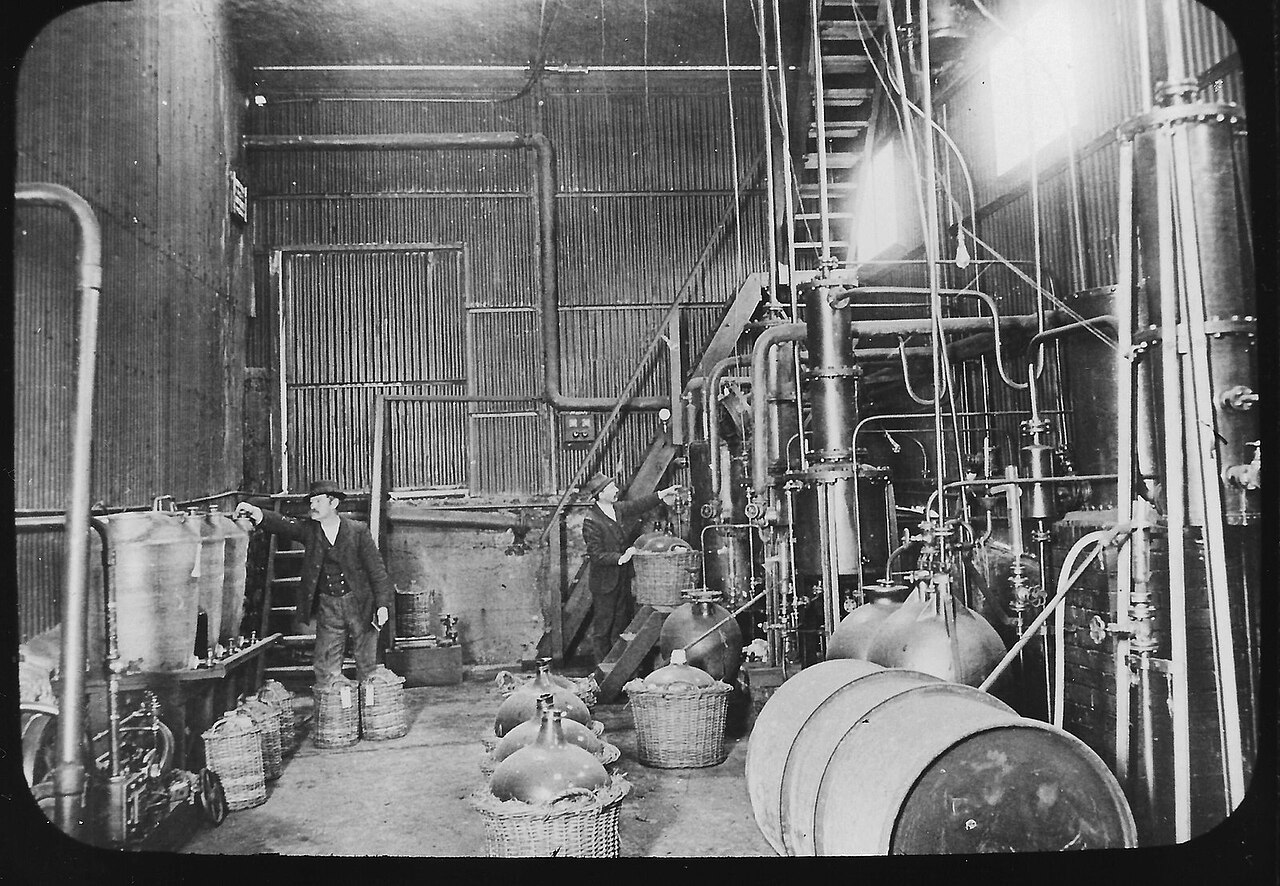
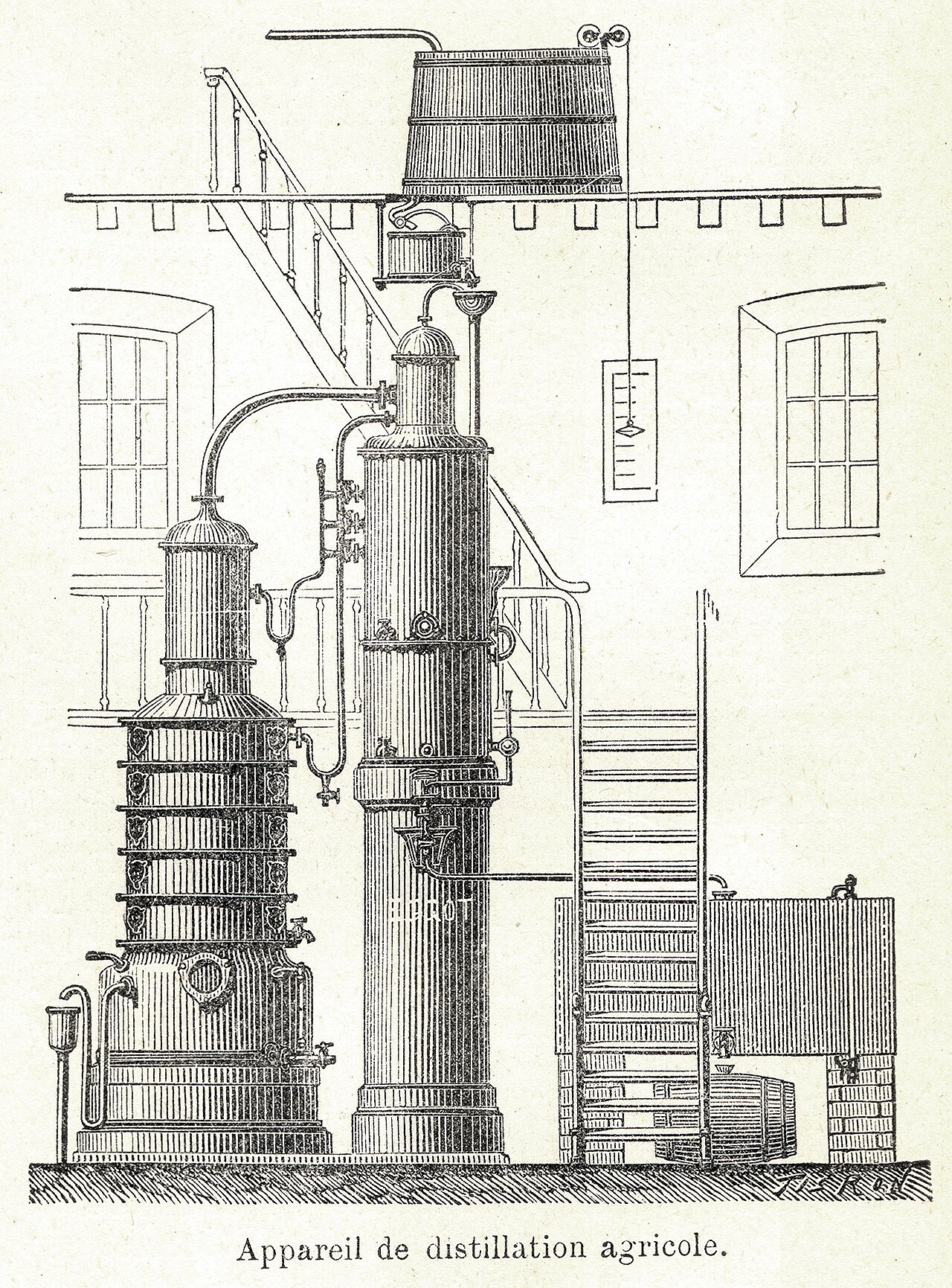
Distillation is a process of separating the component substances of a liquid mixture by selective boiling and condensation. The process exploits differences in the relative volatility of components and is used in numerous industrial applications, from producing alcoholic beverages to cryogenic air separation.
- field
- Chemical engineering, chemistry
- known_for
- Separating liquid mixtures by boiling and condensation
- key_principle
- Relative volatility of components
Lore & Background
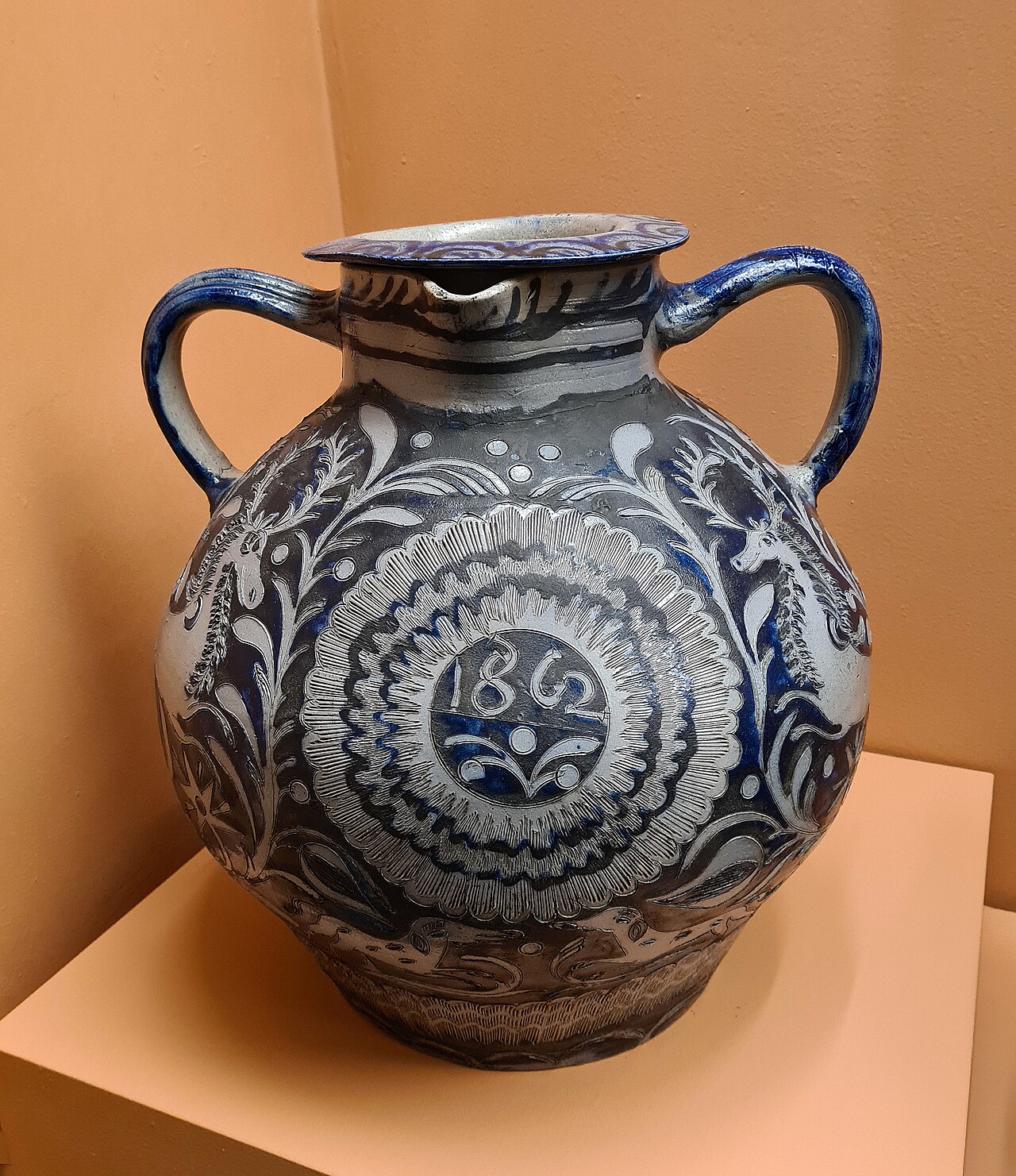
Early evidence of distillation was found on Akkadian tablets dated c. According to British chemist T. Fairley, neither the Greeks nor the Romans had a term for the modern concept of distillation; the Latin 'distillo' referred to any process where a liquid was separated in drops. Aristotle knew that water condensing from evaporating seawater is fresh, though this experiment may not have involved boiling.
Reader's Guide
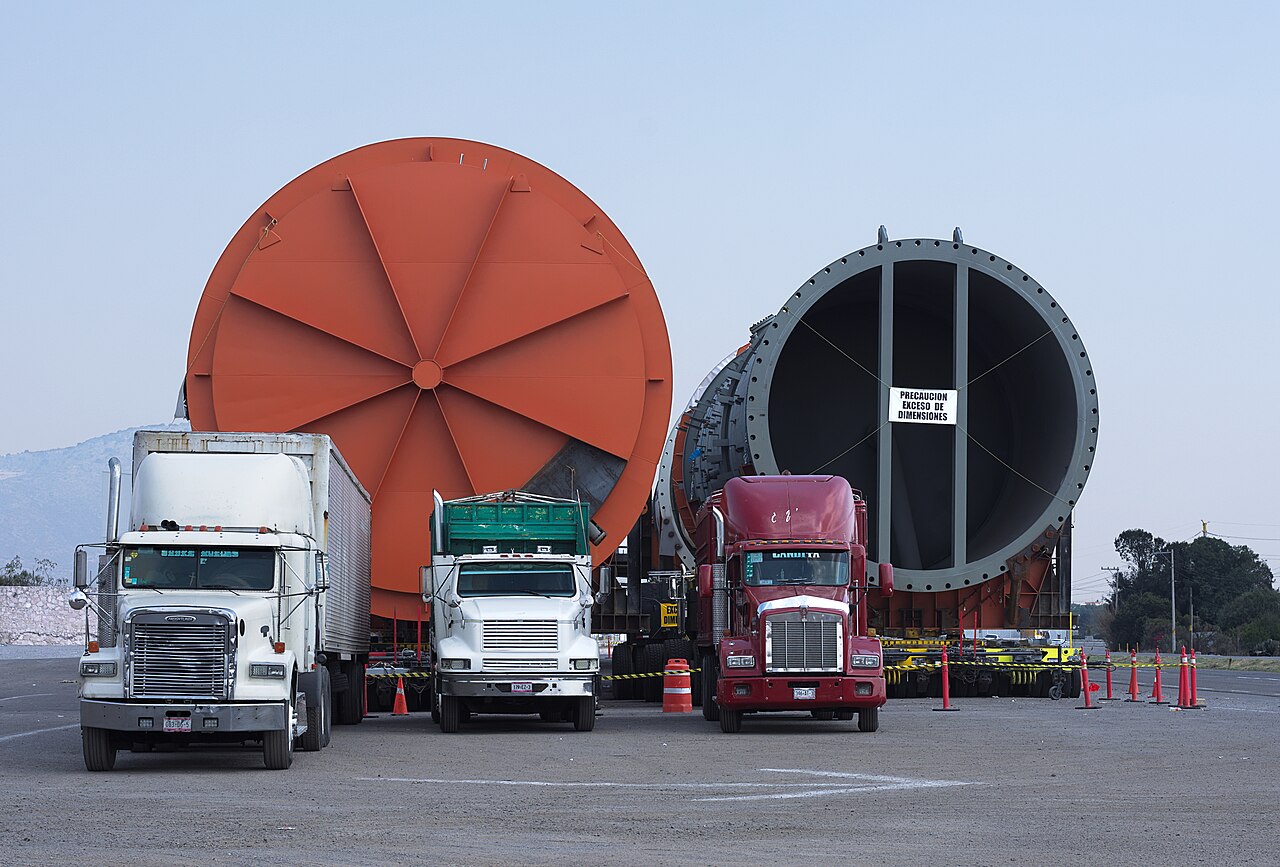
Distillation has an enormous environmental footprint, consuming approximately 25% of all industrial energy use because it operates based on phase changes requiring vast energy inputs. It can operate over a wide range of pressures from 0.14 bar to nearly 21 bar and is capable of separating feeds with high volumetric flowrates. Industrial applications include distilling fermented products for alcoholic beverages, desalination, crude oil stabilisation, fractional distillation in oil refineries, cryogenic air separation, and chemical synthesis. The term 'distillation' is used as a unit of operation denoting physical separation, not a chemical reaction. Dry distillation (thermolysis and pyrolysis) involves heating solid materials to produce gases that condense into fluid or solid products.
Did You Know?
- Distillation consumes approximately 25% of all industrial energy use.
- Aristotle knew that water condensing from evaporating seawater is fresh.
- The Latin 'distillo' referred to any process where a liquid was separated in drops, not modern distillation.
The Physics Behind the Process
Steam distillation exploits a fundamental property of matter: even below its boiling point, every substance exerts some vapor pressure. In ordinary distillation, boiling is necessary because without it, a stagnant layer of vapor-saturated air forms above the liquid, and further evaporation halts once partial pressures equalize—leaving only painfully slow diffusion to move molecules toward a condenser. Steam distillation sidesteps this bottleneck entirely. Rather than forcing the target compound to boil, the technique relies on steam generated from boiling water to sweep away whatever vapors the substance of interest can produce at that temperature. The compound need not dissolve in water or even mix with it; it simply needs enough vapor pressure at the steam's temperature to be carried along. In some cases, the water and target form an azeotrope that lowers the mixture's boiling point below 100 °C—bromobenzene, for instance, boils at 156 °C on its own but co-boils with water at just 95 °C. Yet azeotrope formation is not a prerequisite; the method works whenever the substance can contribute vapor to the steam stream.
Medieval Roots of a Modern Technique
The intellectual lineage of steam distillation stretches back to the early Islamic scholarly tradition. Recipes employing the technique appear in the Kitāb al-Taraffuq fī al-ʿiṭr, a treatise on perfume chemistry attributed to the philosopher al-Kindi, who lived roughly between 801 and 873 CE. Centuries later, the Persian polymath Avicenna (980–1037) applied the same principle to produce essential oils, specifically by adding water to rose petals and distilling the resulting mixture. By the late thirteenth and early fourteenth centuries, the technique had scaled from a laboratory curiosity to an industrial process: the Syrian scholar al-Dimashqi (1256–1327) documented large-scale production of rose water using steam distillation. These medieval practitioners established the core logic that still governs the method today—using the vapor of boiling water to transport volatile aromatic compounds away from their solid or liquid matrices, then condensing and separating them. The continuity from al-Kindi's perfume recipes to modern essential-oil factories underscores how a simple physical insight, once articulated, can persist across more than a millennium of technological change.
From Orange Peels to Organic Synthesis
Steam distillation finds its most visible role in extracting essential oils from plant material. Industrially, eucalyptus oil, camphor oil, and orange oil are all obtained by passing steam through the relevant botanical matter. A classic example is recovering limonene (boiling point 176 °C) from orange peels—a temperature the delicate material could never withstand under direct heating. The method also proves invaluable when the desired compound exists in only trace amounts relative to non-volatile residues, or when the substance would decompose if heated to its own boiling point. Beyond perfumery, the technique aids fatty-acid purification, such as recovering acids from tall oils. In the chemical laboratory, steam distillation features in multi-step syntheses: a classic bromobiphenyl preparation uses it to strip excess benzene and then purify the brominated product; a benzophenone route employs steam to recover unreacted carbon tetrachloride and hydrolyze an intermediate dichloride; and in one purine synthesis, it removes volatile benzaldehyde from a non-volatile target. Though vacuum distillation and supercritical fluid extraction have displaced it in many contexts, its simplicity and low cost keep it relevant in specific industrial and academic settings.
Three Configurations and the Hardware That Serves Them
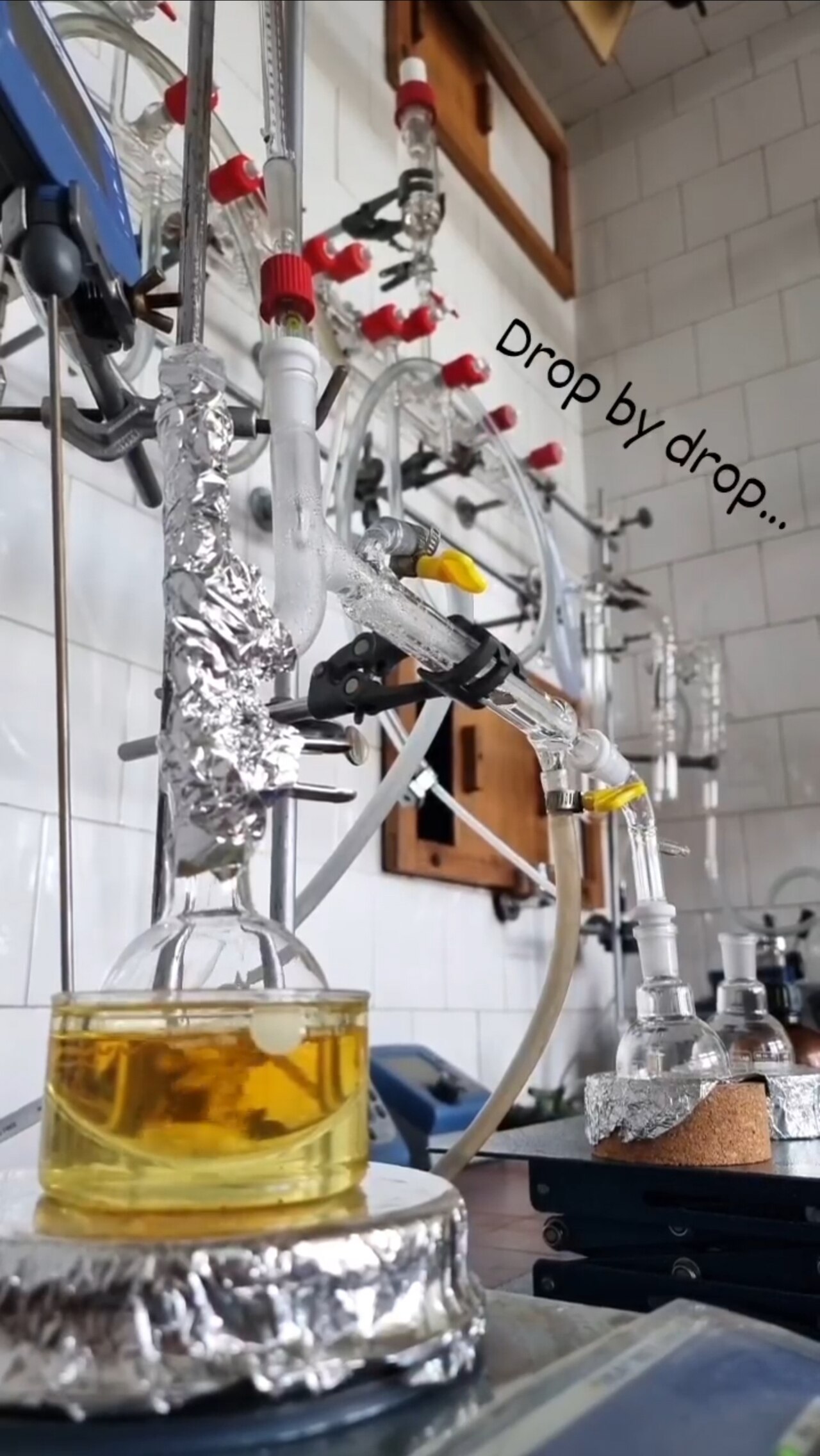
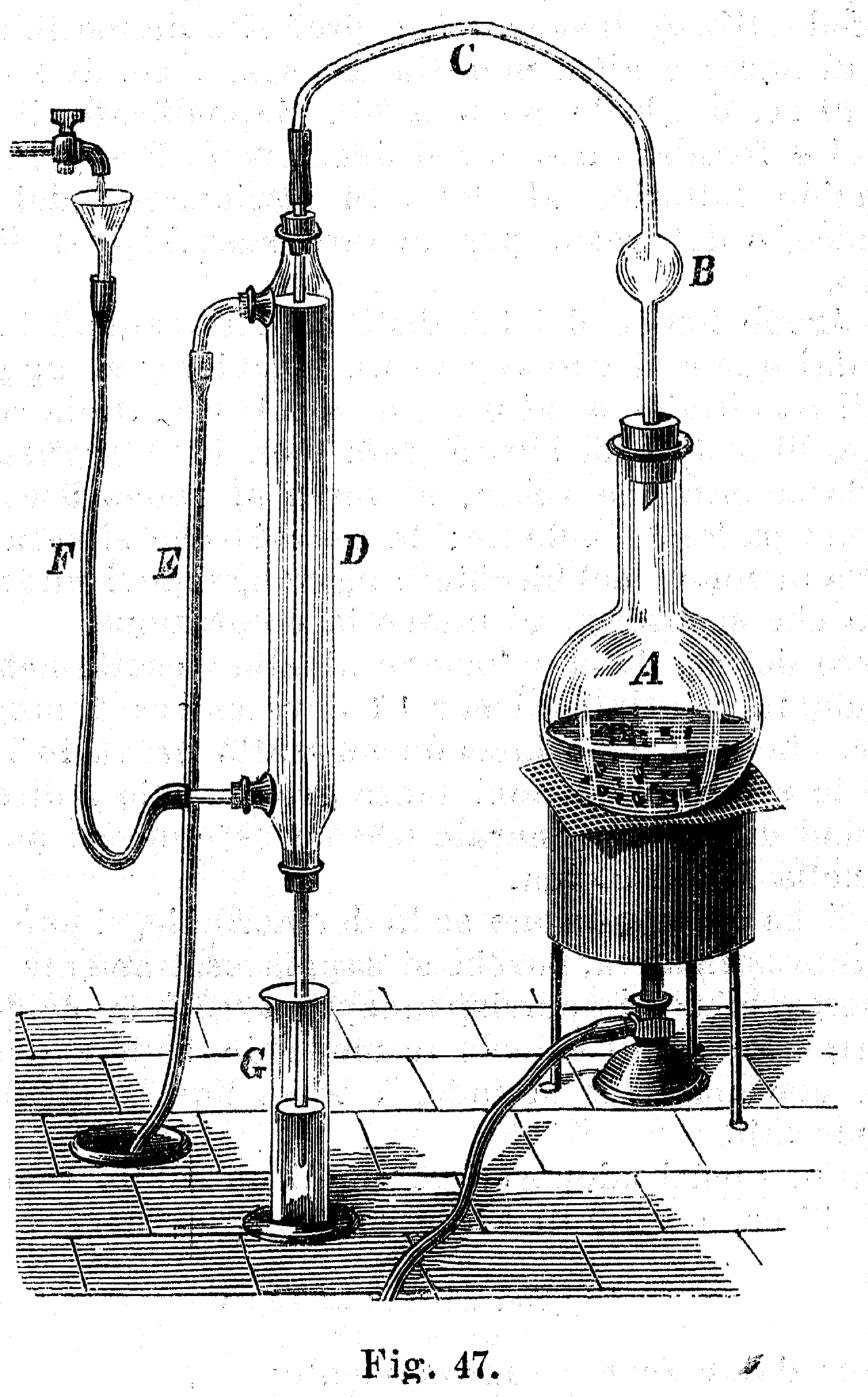
Steam distillation is not a single rigid procedure but a family of related configurations. In the simplest form, called hydrodistillation or water distillation, the starting material is mixed directly with water inside the boiling vessel. In direct steam distillation, the material is suspended above the water level, held by a metal mesh or perforated screen, so that steam rises through it without submerging it. The most versatile variant is dry steam distillation, in which steam generated in a separate boiler is forced through the material in its own container. This last arrangement carries a practical advantage: the steam can be superheated above 100 °C, driving a more efficient extraction. On the laboratory bench, steam is typically piped in from an external source, though a Clevenger-type apparatus can generate it in situ. For analytical work, the Likens-Nickerson apparatus combines steam distillation with simultaneous extraction, isolating target organic compounds for downstream analysis. The choice among these configurations depends on the volatility of the target, the sensitivity of the starting material, and whether the goal is bulk production or precise analytical isolation.
Gallery
Frequently Asked Questions
Who is Distillation?
Distillation is a separation technique that splits a liquid mixture into its individual components by selectively boiling one part and then condensing it back into liquid form. It sits at the intersection of chemistry and chemical engineering.
What are Distillation's powers or core role?
Its fundamental ability is exploiting differences in relative volatility—components with different boiling points get pulled apart during the heating cycle. This lets it isolate everything from ethanol in beverages to oxygen in cryogenic air separation.
Why is Distillation important to the broader field?
It underpins countless industrial processes, from brewing and petroleum refining to producing ultra-pure gases at scale. Without it, separating complex liquid mixtures economically would be far more difficult.
How does Distillation's story end?
Rather than a single narrative ending, each run concludes when the desired fraction has been collected and condensed into a separate vessel. The residual liquid, still holding the less volatile components, is what remains behind.
More in Chemistry 1-24
Elsewhere in the Chemistry universe
Spotted an error? Know more?
This is a living reference — every entry is fact-audited, and reader corrections feed straight into our audit queue. Suggest an edit · See this site's audit record