
Haloalkane
Alkanes with halogen substituents, used widely but also pollutants.

Tommaso.sansone91 · CC0
Haloalkanes, also known as halogenoalkanes or alkyl halides, are alkanes containing one or more halogen substituents of hydrogen. They are a subset of the general class of halocarbons, though the distinction is not often made. Haloalkanes have been known for centuries, with the first synthesis of chloroethane generally attributed to the 18th century (with earlier work in the 17th century), and their systematic synthesis developed in the 19th century alongside the understanding of alkane structure. They are widely used commercially as flame retardants, fire extinguishants, refrigerants, propellants, solvents, and pharmaceuticals, but many have also been shown to be serious pollutants and toxins.
- known since
- 18th century (first synthesis of chloroethane)
Lore & Background
Haloalkanes have been known for centuries, with the first synthesis of chloroethane generally attributed to the 18th century (with earlier work in the 17th century). The systematic synthesis of such compounds developed in the 19th century in step with the development of organic chemistry and the understanding of the structure of alkanes. Methods were developed for the selective formation of C-halogen bonds, including addition of halogens to alkenes, hydrohalogenation of alkenes, and conversion of alcohols to alkyl halides. These methods are so reliable and easily implemented that haloalkanes became cheaply available for industrial chemistry, as the halide could be further replaced by other functional groups.
Reader's Guide
Haloalkanes are significant for their widespread commercial use as flame retardants, fire extinguishants, refrigerants, propellants, solvents, and pharmaceuticals. However, subsequent to their widespread use, many halocarbons have been shown to be serious pollutants and toxins. For example, chlorofluorocarbons lead to ozone depletion, and methyl bromide is a controversial fumigant. Only haloalkanes containing chlorine, bromine, and iodine are a threat to the ozone layer, though fluorinated volatile haloalkanes may have activity as greenhouse gases. Methyl iodide, a naturally occurring substance, does not have ozone-depleting properties and has been designated a non-ozone layer depleter by the United States Environmental Protection Agency. The ozone-depleting abilities of CFCs arise from the photolability of the C–Cl bond.
Did You Know?
- The first synthesis of chloroethane is generally attributed to the 18th century, with earlier work in the 17th century.
Industrial Utility and Commercial Reach
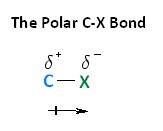
Haloalkanes occupy a remarkably broad niche in modern commerce, serving roles that span from everyday consumer products to critical industrial processes. Their commercial applications include flame retardants, fire extinguishing agents, refrigerants, propellants, chemical solvents, and pharmaceutical compounds. A key reason for their widespread adoption lies in their physical behavior: because they contain fewer carbon-hydrogen bonds than their parent alkanes, haloalkanes are notably less flammable, which makes them suitable for fire-suppression applications. Their increased polarity also renders them superior solvents compared to the corresponding non-halogenated alkanes. From an industrial chemistry standpoint, haloalkanes became inexpensive and readily available because the halogen substituent can be subsequently displaced by other functional groups, effectively turning them into versatile intermediates. This combination of practical utility, favorable physical properties, and synthetic accessibility has cemented their role across numerous sectors of the global economy.
Environmental Consequences and Toxicological Profile
The same chemical features that make haloalkanes industrially valuable also underpin their environmental hazards. After decades of widespread commercial deployment, numerous halocarbons have been identified as serious pollutants and toxic agents. Chlorofluorocarbons, in particular, were shown to drive stratospheric ozone depletion, a consequence traced to the photolability of the carbon-chlorine bond. Methyl bromide remains a controversial fumigant in agricultural contexts. Importantly, only haloalkanes bearing chlorine, bromine, or iodine pose a direct threat to the ozone layer, while volatile fluorinated haloalkanes may nonetheless contribute to greenhouse warming. Not all halogenated compounds carry equal risk: methyl iodide, a naturally occurring substance, has been designated by the United States Environmental Protection Agency as a non-ozone-depleting compound. Beyond atmospheric effects, many haloalkanes function as alkylating agents, with primary structures and those carrying heavier halogens exhibiting the greatest reactivity, whereas fluoroalkanes generally do not act as alkylating agents under normal conditions.
Structural Diversity and Physical Behavior
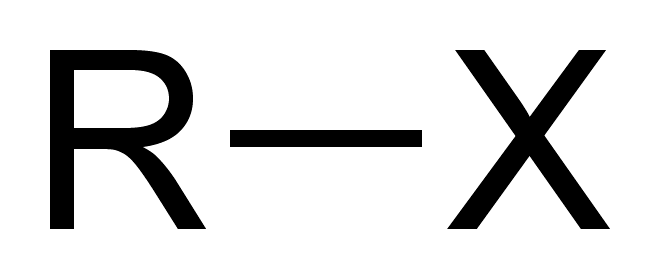
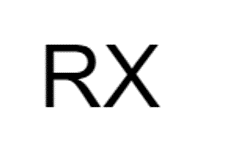
Haloalkanes follow the general formula RX, where R represents an alkyl or substituted alkyl group and X denotes a halogen from group 17. Structurally, they are categorized by the degree of substitution on the carbon bearing the halogen: primary haloalkanes have that carbon linked to one other alkyl group, secondary to two, and tertiary to three. They are further distinguished by the specific halogen present, yielding organofluorine, organochlorine, organobromine, and organoiodine compounds, with mixed-halogen species such as CFCs, HCFCs, and HFCs also well established. Physically, most haloalkanes are colorless, relatively odorless, and hydrophobic. Their melting and boiling points typically exceed those of the parent alkanes, scaling with halogen atomic weight and count, a trend driven by stronger intermolecular forces ranging from London dispersion to dipole-dipole interactions. Tetraiodomethane, for instance, is a solid while tetrachloromethane is a liquid. Fluoroalkanes, however, defy this pattern, exhibiting lower phase-transition temperatures than their nonfluorinated counterparts because fluorine's low polarizability weakens intermolecular attraction.
Historical Development and Synthetic Routes
Although individual haloalkanes such as chloroethane were produced as early as the fifteenth century, systematic synthesis of these compounds emerged in the nineteenth century alongside the maturation of organic chemistry and the growing understanding of alkane structure. Chemists developed reliable strategies for selectively forming carbon-halogen bonds, including the addition of halogens across alkene double bonds, hydrohalogenation using dry hydrogen halides like HCl or HBr, and the conversion of alcohols into alkyl halides. In hydrohalogenation, Markovnikov's rule governs regioselectivity under normal conditions, directing hydrogen to the carbon bearing more hydrogen substituents, though neighboring functional groups can override this preference. Free radical halogenation of alkanes offers another route, though it typically yields mixtures of mono- and multihalogenated products at various positions. Beyond laboratory synthesis, nature itself generates substantial quantities: an estimated 4.1 billion kilograms of chloromethane and one to two million tons of bromomethane are released annually by natural and oceanic sources, underscoring that haloalkanes are not solely human-made.
Gallery


Frequently Asked Questions
Who is Haloalkane?
Haloalkane is a family of organic molecules built on a saturated carbon backbone where one or more hydrogen atoms have been swapped out for halogen atoms such as chlorine, bromine, or iodine. They sit within the broader halocarbon group and are sometimes called alkyl halides or halogenoalkanes.
What are Haloalkane's powers/role?
In the industrial world, Haloalkane serves as a flame retardant, a fire-suppression agent, a refrigerant, and a propellant in aerosol products. Their reactivity toward nucleophilic substitution also makes them key intermediates in pharmaceutical and polymer synthesis.
How does Haloalkane's story end?
Many Haloalkane compounds persist in the atmosphere and act as greenhouse gases or ozone-depleting substances, prompting their phase-out under international treaties. Their long environmental lifetimes mean they linger as pollutants rather than breaking down quickly.
Why is Haloalkane important?
Haloalkane underpins a large share of modern chemical manufacturing, from producing solvents and anesthetics to serving as building blocks for more complex molecules. Without them, entire sectors of medicine, agriculture, and refrigeration would lose critical feedstocks.
When did Haloalkane first appear?
The earliest documented preparation of a haloalkane—chloroethane—dates to the 1700s, with some precursor work in the 1600s. Systematic synthesis and structural understanding really took off in the 1800s once chemists grasped the architecture of alkanes.
More in Chemistry 25-37
Elsewhere in the Chemistry universe
Spotted an error? Know more?
This is a living reference — every entry is fact-audited, and reader corrections feed straight into our audit queue. Suggest an edit · See this site's audit record