
Halogen
Highly reactive nonmetals that form salts and acids.

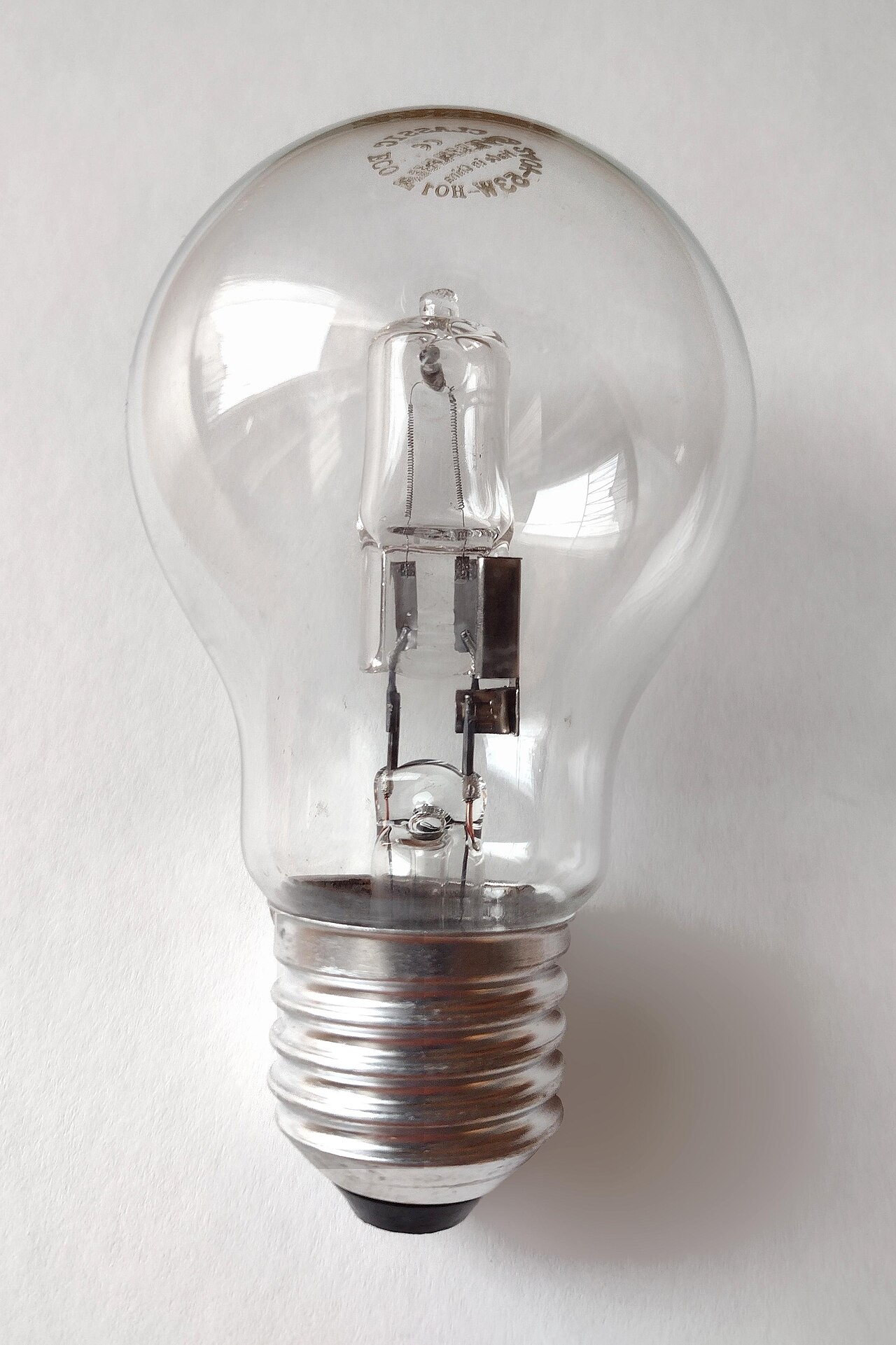
Raimond Spekking · CC BY-SA 4.0
The halogens are a group of six chemically related elements in the periodic table: fluorine, chlorine, bromine, iodine, astatine, and tennessine. Known as group 17 in modern IUPAC nomenclature, the word 'halogen' means 'salt former' or 'salt maker,' as these elements produce a wide range of salts when reacting with metals. They are the only periodic table group containing elements in three states of matter at standard temperature and pressure, and all form acids when bonded to hydrogen.
- group
- Group 17 (halogens)
- elements
- Fluorine, chlorine, bromine, iodine, astatine, tennessine
- state_at_STP
- Three states of matter (solid, liquid, gas)
- key_property
- Highly reactive, seven valence electrons
- common_uses
- Disinfectants, flame retardants, salt production
Lore & Background
Astatine and tennessine are radioactive and were synthesized in the 20th and 21st centuries. Corson, K.R. Mackenzie, and Emilio G. Segrè by bombarding bismuth with alpha particles. Earlier claims of discovering element 85 by Fred Allison, Rajendralal De, Horia Hulubei, and Walter Minder were all mistaken.
Reader's Guide
The halogens are significant for their high reactivity and wide-ranging applications. Fluorine is the most reactive element, attacking glass and forming compounds with noble gases; it is used in Teflon and other organofluorine compounds. Chlorine, bromine, and iodine serve as disinfectants, with chlorine notably used as a poisonous gas in World War I. Organobromides are key flame retardants. The hydrogen halides—HF, HCl, HBr, HI, and HAt—all form acids when mixed with water, though hydrofluoric acid is weak while the others are strong. The group's trend of decreasing reactivity and increasing melting points with atomic number reflects stronger London dispersion forces. Their ability to produce salts with metals has been fundamental to chemistry and industry, from common table salt to silver bromide used in photography.
Did You Know?
- The word 'halogen' means 'salt former' or 'salt maker'.
- Chlorine gas was used as a poisonous weapon during World War I.
- Fluorine is so reactive it can form compounds with the usually inert noble gases.
- Astatine's name comes from the Greek word 'astatos', meaning 'unstable'.
The Long Road to Discovery
The halogens were not all discovered at once; their isolation spanned nearly two centuries. Fluorine proved the most elusive. Although its mineral form, fluorspar, was recognized as early as 1529, chemists could not free the element for over three hundred years. George Gore likely produced fluorine via electrolysis in 1869 but could not prove his results. Henri Moissan finally succeeded in 1886, performing electrolysis on potassium bifluoride dissolved in anhydrous hydrogen fluoride in Paris. Chlorine's identification was more gradual: Carl Wilhelm Scheele generated it in 1774 by heating hydrochloric acid with manganese dioxide, yet he misidentified it as a compound for thirty-three years. Humphry Davy confirmed its elemental nature in 1807. Bromine was spotted by Antoine Jérôme Balard in the 1820s when he passed chlorine gas through brine. Iodine appeared almost accidentally in 1811, when Bernard Courtois added sulfuric acid to seaweed ash and noticed purple fumes condensing into dark crystals; Joseph Gay-Lussac verified the find. Astatine defied several false claims in the 1930s before Dale Corson, K.R. Mackenzie, and Emilio Segrè produced it in 1940 by bombarding bismuth with alpha particles. Tennessine, the group's newest member, was synthesized in 2010 by Yuri Oganessian's multinational team.
Chemical Nature and Reactivity
The halogens share a defining electronic feature: seven valence electrons in their outermost shell. This configuration makes them hungry for one additional electron to complete the octet, driving their well-known reactivity. Fluorine, chlorine, bromine, and iodine are all nonmetals, while the chemical behavior of astatine and tennessine remains unconfirmed due to their rarity and radioactivity. A clear trend runs down the group: as atomic size increases, reactivity decreases. Fluorine sits at the top as the most reactive halogen, yet it deviates from the expected bond-energy pattern. While it forms the strongest bonds with other atoms, the F₂ diatomic molecule itself holds together with unusually weak bonds. All halogens form acids when bonded to hydrogen, and the group is unique among periodic table columns in containing elements that exist as solids, liquids, and gases at standard temperature and pressure. Their high electronegativity, driven by high effective nuclear charge, makes them dangerous to biological organisms in sufficient quantities.
Practical Uses and Perils
Despite their danger, halogens are woven into everyday life. The middle members—chlorine, bromine, and iodine—serve widely as disinfectants, making them essential in water treatment and medical settings. Organobromides represent the most important class of flame retardants, protecting everything from textiles to electronics. The halogens also produce a remarkable range of salts when they react with metals: sodium chloride (common table salt), calcium fluoride, silver bromide, and potassium iodide are just a few examples. Most are extracted from minerals or natural salts. Yet the same reactivity that makes them useful makes them hazardous. Elemental halogens are toxic and can be lethal. The most grim example came during World War I, when chlorine gas was deployed as a chemical weapon. It displaced oxygen in contaminated zones, burned human tissue both externally and internally, and attacked the lungs, making breathing difficult or impossible depending on the level of exposure.
Names and Their Origins
The group's collective name, "halogen," translates to "salt former" or "salt maker," a reference to the salts these elements produce with metals. German chemist Johann Schweigger first proposed the term in 1811, and Swedish chemist Baron Jöns Jacob Berzelius formalized it in 1826 for fluorine, chlorine, and iodine, noting their tendency to create sea-salt-like compounds with alkaline metals. Each element's English name ends in "-ine" and carries a descriptive root. Fluorine derives from the Latin fluere, "to flow," because it was extracted from fluorite, a mineral used as a flux in metalworking. Chlorine comes from the Greek chloros, "greenish-yellow," reflecting the gas's color. Bromine takes its name from the Greek bromos, meaning "stench," a nod to its pungent odor. Iodine is named for the Greek iodes, "violet," after the striking purple fumes Courtois observed. Astatine's name comes from the Greek astatos, "unstable," fitting for a radioactive element. Tennessine is named after the U.S. state of Tennessee, where it was first synthesized.
Gallery
Frequently Asked Questions
Who is Halogen?
Halogen is the name for Group 17 on the periodic table, a family of six nonmetal elements ranging from fluorine to tennessine. The name itself means "salt maker," a nod to how readily these elements bond with metals to produce salts.
What are Halogen's powers?
Each halogen atom carries seven valence electrons, which drives their intense reactivity and their ability to form both salts and acids. In practical terms, this reactivity is what makes them useful as disinfectants and flame retardants.
What states can Halogen take?
The halogen family is unique on the periodic table because it includes elements that are gases (fluorine, chlorine), a liquid (bromine), and solids (iodine, astatine, tennessine) at standard temperature and pressure. No other group spans all three states simultaneously.
Why is Halogen important?
Halogens are essential to everyday products like bleach, table salt, and flame-retardant coatings, and their reactivity underpins a huge range of industrial chemical processes. They also serve as a textbook example of how a shared valence-electron count governs an entire family's behavior.
Where does Halogen's name come from?
The word is built from two Greek roots meaning "salt" and "to produce," a direct reference to the fact that these elements consistently generate salts when they react with metals. The family was grouped together because all six members share the same seven-valence-electron outer shell.
More in Chemistry 25-37
Elsewhere in the Chemistry universe
Spotted an error? Know more?
This is a living reference — every entry is fact-audited, and reader corrections feed straight into our audit queue. Suggest an edit · See this site's audit record